Regional knowledge economies such as Silicon Valley and New York City are one of several areas of research for the Center for the Study of Economy and Society's Economic Sociology Lab, supported by graduate researchers and undergraduate assistants.
BCTR's Residential Child Care Project confirmed 79 fatalities nationally over 26 years resulting from physical and mechanical restraints of children living in out-of-home care settings.
Around 80% of bird species examined in a new study were reported in greater numbers in human-altered habitats during pandemic lockdowns, according to new research based on data from the eBird program at the Cornell Lab of Ornithology.
Footprints found at White Sands National Park in New Mexico provide the earliest unequivocal evidence of human activity in the Americas and offer insight into life over 23,000 years ago.
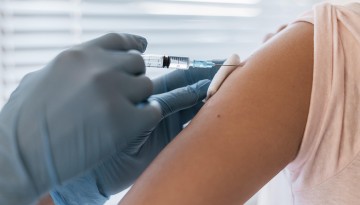
In this Q&A, Dr. Roy Gulick of Weill Cornell Medicine breaks down the science underlying booster shots of COVID-19 vaccines and answers some frequently asked questions.
New research from the College of Engineering lays out in detail why ranked-choice voting, combined with multi-member legislative districts, promotes fair representation, particularly when it comes to blunting the practice of gerrymandering.
Two Cornell professors calculate how wind energy scenarios could reduce atmospheric average temperatures by 0.3 to 0.8 degrees Celsius by the end of the century.
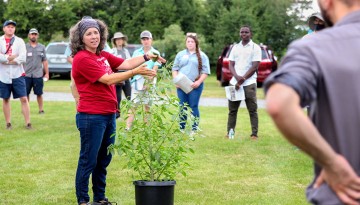
Hemp producers and organic apple and grape growers will have evidence-based guidance on their weed management, thanks to two new USDA grants to a Cornell AgriTech researcher.
A new study published Sept. 7 in the journal of the International Union of Crystallography demonstrates that cryo-EM samples can be prepared with a safer and less expensive coolant – liquid nitrogen – and these samples can produce even sharper images than those prepared with ethane.