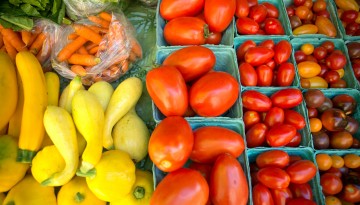
Farmers markets and roadside stands are more successful in communities with more nonprofits, social enterprises and creative industries, according to a new study.
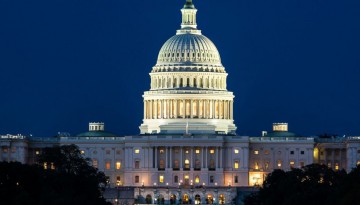
Analyzing more than 20 years of floor speeches by members of Congress, a new book co-authored by Peter K. Enns, professor in the Department of Government, explains why corporate and wealthy interests dominate the national economic agenda.
A grant extension will continue work by a team of Cornell researchers and community partners to reduce the risk of opioid abuse for low-income youth and families.
Cornell researchers are using satellite imagery to protect endangered and damaged cultural heritage in the South Caucasus, where an ethnic conflict between Armenia and Azerbaijan has raged for decades.
Members of the Prosocial Project have received a four-year, $1.19 million grant from the National Science Foundation for work on understanding the emergence and maintenance of norms to deter negative online behavior.
Food distribution centers can protect the food supply more effectively by setting traps near features that attract rodents, rather than a set distance apart, a new Cornell-led study found.
Using observations of gravitational waves, physicists at Cornell, MIT and three other institutions have for the first time confirmed Stephen Hawking’s area theorem of black holes, which states their event horizons should never shrink.
The funding aims to help the U.S. dairy industry become carbon neutral while supporting farmers’ livelihoods and will measure greenhouse gas emissions at a working New York dairy.