Thanks to Cornell researchers and their colleagues, a dataset of thousands of experiments is publicly available, providing insight into fields like political science, communication, psychology, marketing, organizational behavior, statistics, computer science and education.
In a new book, “Policymaker’s Journal,” Kaushik Basu offers musings about economic policymaking and public life during his years serving as chief economic adviser in India’s finance ministry and chief economist at the World Bank.
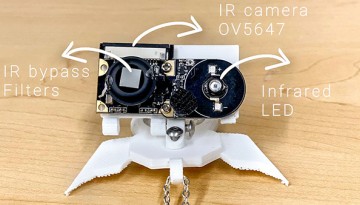
Tracking facial movements, and possibly their cause, is one of the proposed applications for NeckFace, a necklace-type wearable sensing technology developed in the lab of Cheng Zhang, assistant professor of information science.
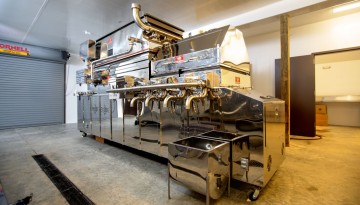
The Cornell Maple Program has opened an advanced, New York state-funded maple research laboratory, an upgrade that will enable research on making high-quality syrup, and new and existing maple products – all at commercial scales.
Besides a stray feline Roomba, very few people are investing energy into putting clothes on robots. Researchers from Cornell Tech and NYU say that now’s the time to think more actively about when, how and why we would dress them
Ariel Ortiz-Bobea, associate professor at Dyson, and collaborators have found that a law regulating wine production in 1930s France, known as the AOC, resulted in a 7% net increase in industry welfare, and set the standard for quality control.
New, award-winning research from the Cornell Ann S. Bowers College of Computing and Information Science is helping inform and improve future design and development of interactive machine learning tools.
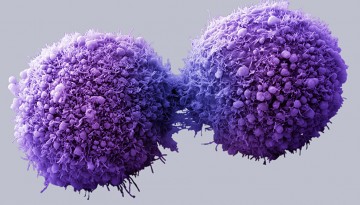
A new strategy for developing vaccines against cancer showed promise in a proof-of-concept study led by scientists at Weill Cornell Medicine, NewYork-Presbyterian and Heidelberg University Hospital.