Human tracks at White Sands National Park record more than 1.5 kilometers of a journey and form the longest Late Pleistocene-age double human trackway in the world.
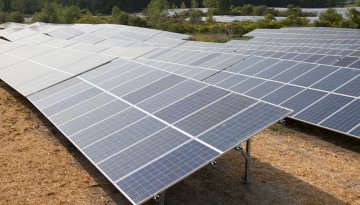
Engineering professor Max Zhang has been awarded a NYSERDA grant to determine efficient solar farm array configurations so the state can avoid land-use conflicts or spoiling precious agricultural space.
An intercampus research team has been awarded a five-year, $3.65 million grant from the National Institutes of Health to develop a quick, inexpensive method for accurately diagnosing urinary tract infections in kidney transplant patients.
A field study conducted by Cornell researchers showed that the way courses are presented online is related to participation by historically underrepresented students.
The Office of Engagement Initiatives recently awarded Engaged Curriculum Grants to 19 teams of faculty and community partners that are developing community-engaged learning courses, majors and minors across the university.
In his new book “Life, Death and Other Inconvenient Truths: A Realist’s View of the Human Condition,” Shimon Edelman offers a reference guide to human nature and human experience.
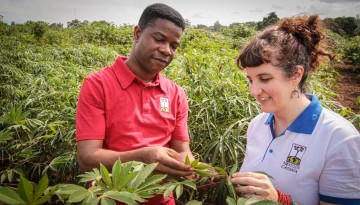
Ceres2030, headquartered at Cornell, aims to end world hunger by 2030. Harnessing machine learning and librarian savvy, the project identified the most effective ways to boost crops, empower farmers and protect the environment.
Vijay Varma, a Klarman Postdoctoral Fellow in physics, is using his three-year appointment to research gravitational waves and their sources, which include black holes and neutron stars.
A new interdisciplinary study from the College of Veterinary Medicine shows that the protein that lubricates our joints may actually be a signal of impending arthritis in animals and humans.