A new research field – “environmental technology, or envirotech” – is emerging during an age when food systems span the globe, waste pollutes the natural world and natural disasters seem to have higher impacts on communities.
A Cornell-led project will use computer modeling and outreach to find optimal strategies to minimize COVID-19 cases and transmission among workers in food processing facilities, while maintaining the best possible production.
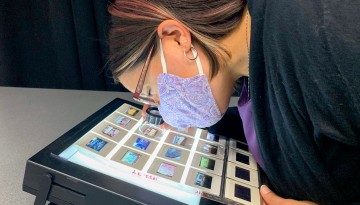
Cornell University Library’s annual Grants Program for Digital Collections in Arts and Sciences is funding three projects aimed at conserving fragile, physical artifacts and digitizing them for research and scholarship.
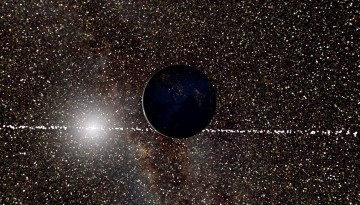
Some exoplanets – planets from beyond our own solar system – have a direct line of sight to observe Earth’s biological qualities from far, far away, according to research led by Lisa Kaltenegger, director of the Carl Sagan Institute.
Nondisclosure agreements implemented by the Trump White House likely infringe on the First Amendment rights of government employees and the press, according to a report by Cornell Law School’s First Amendment Clinic.
In surveys of nearly 2,000 American adults, barely half said they would be willing to take a hypothetical vaccine with an efficacy, or effectiveness, of 50% – the U.S. Food and Drug Administration’s minimum threshold for a COVID-19 vaccine.
Rather than making people less political, religion shapes people’s political ideas, suppressing important group differences and progressive political positions, according to sociologist Landon Schnabel.
Winner of the Leroy P. Steele Prize for Seminal Contribution to Research for his advances in mathematical logic and model theory, Michael Morley was also a devoted advisor of Cornell students. He died Oct. 11.