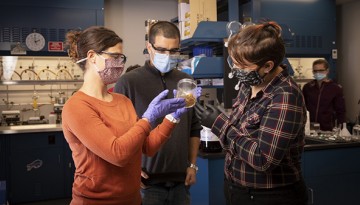
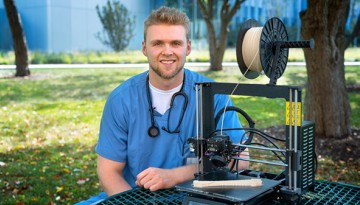
Researchers and clinicians from Cornell’s Ithaca campus, Weill Cornell Medicine and Cornell Tech will gather for an online COVID-19 Summit, Nov. 4-5, to share their expertise and clinical experience with COVID-19.
In five decades of teaching and research, Don Greenberg ’55 has won many prestigious computer graphics awards, while focusing on the skills architecture students need to keep pace.
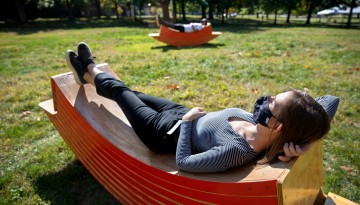
The collaborative outdoor installation “Cornell: Safely Together” aims to make COVID-19 physical distancing a little more social, with mown patterns and furniture on the Ag and Arts quads.
A new grant will fund Cornell research into better understanding and supporting the global supply chain, whose vulnerabilities were exposed by the COVID-19 pandemic.
This Ezra series profiles recently hired faculty members across Cornell’s colleges, schools and units. In their own ways, these researchers, scholars and teachers embody the university’s creative and collaborative vitality…
Cornell’s network of business incubators and accelerators have developed into a growing and robust entrepreneurial engine nurtured with resources, training and mentorship that help faculty, research staff and graduate students launch marketable ideas and technologies.
Potential entrepreneurs looking to commercialize their inventions, applications of their research, or Cornell technologies have multiple paths and resources available to them across the university’s campuses.
Cornell’s incubator directors often work with aspiring entrepreneurs to assist them in applying to programs; they also may advise them on developing a plan, finding resources and growing their potential business, helping them take further advantage of the plethora of startup resources across Cornell’s campuses.
When Frank DeCosta, Ph.D. ’85, thinks back to when he was a student, he reflects on how ignorant he was about intellectual property law. Today, he volunteers at Cornell’s Praxis Center for Venture Development to make sure faculty and student entrepreneurs are more knowledgeable than he had been.