Children – especially teens – growing up in disadvantaged neighborhoods face greater odds of unhealthy weight gain as adults, according to new research by a Cornell sociologist.
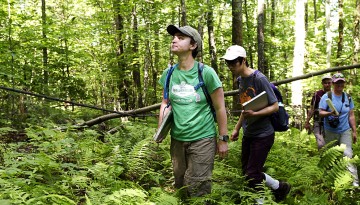
Two CALS students worked with local landowners and conservationists in the forests of central New Hampshire this summer, helping communities cope with the decline of sugar-maple populations.
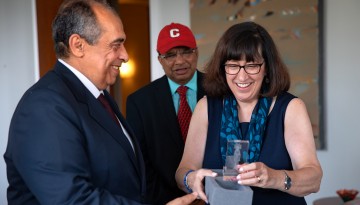
An Egyptian delegation that included that country’s minister of agriculture gathered on campus in early August as part of the Cornell-led Center of Excellence for Agriculture in Egypt.
Educators across the country can now use Cornell-designed interactive tutorials to teach elementary and middle schoolers how to participate positively in social media – while simultaneously learning to navigate some of its potential perils.
Researchers from Boyce Thompson Institute have discovered a natural compound that causes soil roundworms to mature faster and die earlier, which could inform studies of human development and aging.
Computing and Information Science scholars combed through more than 1 million anonymized texts from nearly 3,500 crisis counselors to better understand how job experience affects counselor language use.
New research from Cornell’s Behavioral Analysis of Beginning Years Laboratory, led by associate professor of psychology Michael Goldstein, reveals that baby babbling elicits profound changes in adult speech.
A new book by Cornell historian Lawrence Glickman traces how the term “free enterprise” evolved from a contested keyword in American politics to a cornerstone of conservative philosophy.
Hale Ann Tufan, adjunct assistant professor in CALS and a leading advocate for gender equality as a central tenet of crop improvement, has won the 2019 Borlaug Award for Field Research and Application.