A Cornell-led team has developed a computational model that uses artificial intelligence to find the most sustainable configurations of hydropower dam sites in the Amazon basin.
Thanks to a Small Business Innovation Research award funded by the National Science Foundation, cooling technology startup Heat Inverse is set to scale up and pilot its product with customers.
To celebrate its 20th anniversary, the Faculty of Computing and Information Science will host an academic symposium Oct. 2-3 exploring the history and future of computing at Cornell and around the world.
Larry Smart, professor in the Horticulture Section of the School of Integrative Plant Science, recently joined Cornell Cooperative Extension’s “Extension Out Loud” podcast series to discuss industrial hemp production in New York state.
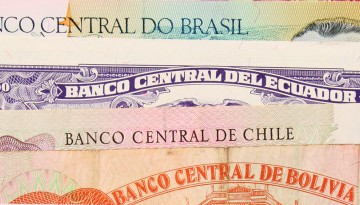
“The Political Economy of Taxation in Latin America,” a new book edited by associate professor Gustavo Flores-Macías, examines how decades of tax reform in Latin America have done little to stem the tide of widespread tax evasion there.
The Yang-Tan Institute is in a partnership that has been awarded a $4 million grant by the U.S. Department of Labor’s Office of Disability Employment Policy to operate a policy development center focused on youth with disabilities.
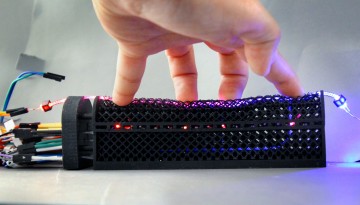
A new stretchable optical lace creates a linked sensory network that would enable robots to sense how they interact with their environment and adjust their actions accordingly.
The Cornell High Energy Synchrotron Source will create a new materials research subfacility, thanks to $7.1 million in funding from the Air Force Research Lab, to facilitate X-ray analysis of new and existing materials.