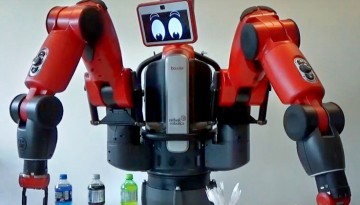
A Cornell-led team was recently awarded a $2.5 million grant from the Office of Naval Research to develop a computational model of how humans form and update their memories of robots.
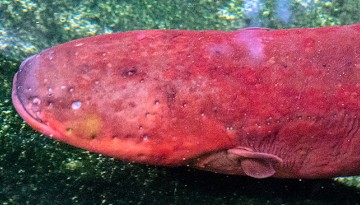
An international team of scientists has discovered two new species of electric eel, one of which delivers 860 volts; the highest level of electricity generated by any living creature.
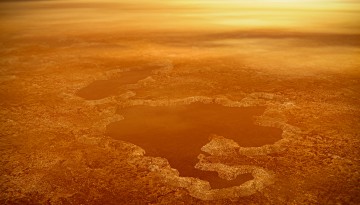
Lakes of liquid methane that pock the landscape on Saturn’s moon Titan were likely formed by explosive, pressurized nitrogen just under the moon’s crusty surface.
A new Android app developed by Cornell Tech researchers and collaborators will make it easy for people to collect their personal health data and share it with trusted medical providers or apps.
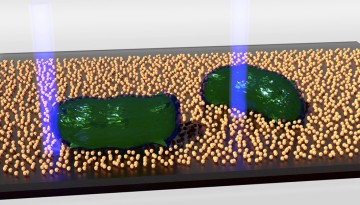
The U.S. Department of Energy has awarded an interdisciplinary team of Cornell researchers $2 million to study the combination of inorganic semiconductor nanoparticles and bacterial cells for more efficient bioenergy conversion.
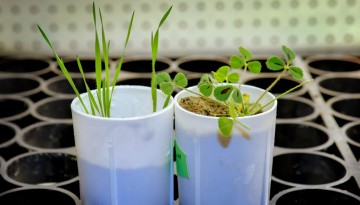
A discovery by Boyce Thompson Institute scientists could help farmers improve phosphate capture, potentially reducing the environmental harm associated with fertilization.
A new Cornell study presents a technique to identify viruses and bacteria in the human body and quantify injuries to organs by using dead fragments of DNA, called cell-free DNA, that roam throughout the bloodstream and urine.
Divisions between political parties are believed to reflect deeply rooted ideological differences, but a new study from sociology professor Michael Macy points to another factor: luck.