Cornell is teaming with Purdue University to establish the first Feed the Future Innovation Lab for Food Safety, which aims to solve some of the world’s greatest challenges in agriculture and food insecurity.
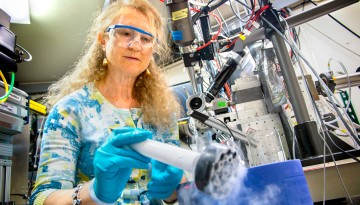
The NIH has awarded Cornell $17.4 million for Macromolecular X-ray science at the Cornell High Energy Synchrotron Source, a subfacility of CHESS specializing in biomedical research.
Nine student teams stayed in Ithaca this summer to continue working on their business ideas, in areas such as machine learning and solar energy, through the Life Changing Labs summer incubator.
How a person would distribute monetary gains and losses over time may depend on their age, according to new research from Corinna Loeckenhoff, associate professor of human development.
As methane concentrations increase in the Earth’s atmosphere, chemical fingerprints point to a probable source: shale oil and gas, according to new Cornell research published in Biogeosciences.
A new clinical model developed by Cornell Tech researchers aims to respond systematically and effectively to the growing array of digital threats against victims of intimate partner violence.
Astronomers seeking life on distant planets may want to go for the glow. Harsh ultraviolet radiation flares from red suns, once thought to destroy surface life, might help uncover hidden biospheres.
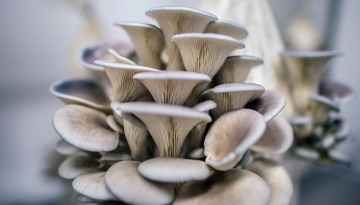
Leep Foods, an upstate New York producer of specialty mushrooms, is working with the Center of Excellence at Cornell AgriTech to develop a blended burger using mushrooms and grass-fed beef.
Two lethal viruses, Nipah and Hendra, may be more potent when their proteins are combined, according to new research from Hector Aguilar-Carreno, associate professor of microbiology and immunology.