China’s citizens support greater reliance on the military and increased defense spending, according to a new study by Jessica Chen Weiss, associate professor of government. But this is not necessarily cause for concern, she says.
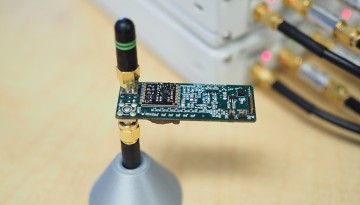
Cornell engineers have created a radio frequency identification system capable of taking measurements at widths thinner than a human hair, opening potential applications ranging from building safety to improved robotics.
Six NYS businesses have been awarded funding to participate in the Cornell Center for Materials Research JumpStart Program, in which they collaborate with Cornell faculty to develop and improve their products.
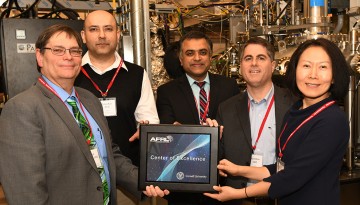
A center established by Cornell and the Air Force Research Lab aims to discover the atomic secrets of beta-gallium oxide, a new material important for the development of electronic devices.
Why do the world’s politicians keep signing weak environmental treaties? Because it helps them get re-elected, according to a new study by economist Marco Battaglini and a colleague.
This year’s College Scholars, from the College of Arts and Sciences, will explore topics including the possibility of a universal language and communities’ ability to recover after conflict.
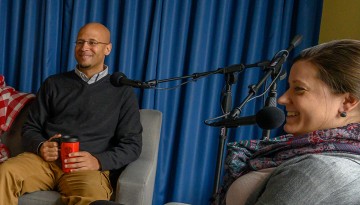
The latest edition of the Cornell Cooperative Extension’s “Extension Out Loud” podcast features human development associate professor Anthony Burrow discussing the importance of purpose for youth.
A research team led by Adam Anderson, professor of human development, has discovered the taste center in the human brain by uncovering which parts of the brain distinguish different types of tastes.
Cornell’s first Digital Agriculture Hackathon saw students from a variety of disciplines come together to develop ways of addressing some of the world’s most pressing agricultural challenges.