The USDA and the NSF have awarded a three-year, $2.4 million grant to a team of Cornell researchers who will study how ag-to-energy land-use conversions could impact food production.
Biodegradable plastics, drone-powered pollination and revolutionary indoor farming techniques are just a few of the innovations that will be on display at the Grow-NY Food and Ag Summit, Nov. 12-13 at the Rochester Riverside Convention Center.
The health of Earth’s oceans is rapidly worsening, and newly published Cornell-led research has examined changes in reported diseases across undersea species at a global scale over a 44-year period.
The Tata-Cornell Institute for Agriculture and Nutrition has been awarded a $1 million grant from the Walmart Foundation to assess challenges facing small-farm aggregation models in India and Mexico.
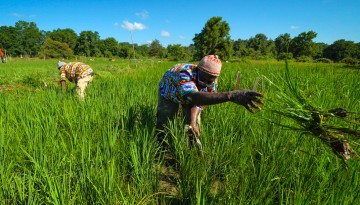
Few farmers attempt to grow rice in the Northeast’s short growing season, but a team of farmers, with the help of Cornell scientists, are experimenting with rice-growing methods to suit New York’s climate.
Twenty-nine Cornell undergraduates spent their summers working and conducting research in communities across New York state as Cornell Cooperative Extension interns.
By editing specialized genes into laboratory fruit flies, scientists have reconstructed evolution and instantly conferred in the flies the same toxin resistance enjoyed by monarch butterflies.
Science may be inching closer to thwarting obesity, heart disease and Type 2 diabetes, as Cornell biochemists have uncovered a key step in how the human body metabolizes sugar.
New research finds that, under threat, plants can communicate with one another in the form of airborne chemicals known as volatile organic compounds, which transfer information.