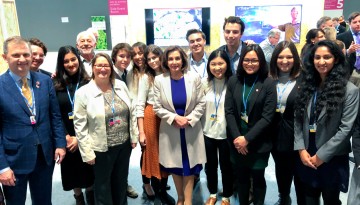
U.S. House Speaker Nancy Pelosi visited with Cornell students at the 25th annual United Nations’ Conference of the Parties climate change conference, Dec. 3 in Madrid, Spain.
On Nov. 18, Cornell leaders, faculty, alumni, collaborators and friends celebrated the university’s long history of collaboration with China with two events in Beijing: an academic symposium and a Cornell-China forum.
Five Cornell faculty members have been elected fellows of the American Association for the Advancement of Science, the world’s largest general scientific society.
A systematic review on the benefits and safety of fortifying wheat or maize flour with folic acid and population health outcomes was led by scientists in the Division of Nutritional Sciences.
Michelle Adelman ’89, through her company, Go Fresh!, is working to build a new sustainable food system in Africa by fostering a market for plant-based meat and dairy alternatives.
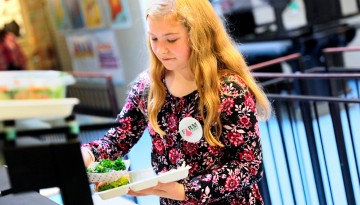
Cornell Cooperative Extension has become a driving force behind a surge in New York’s Farm to School initiatives. The programs stock school cafeterias with fresh, local foods and offer farmers an expanded market for their goods.
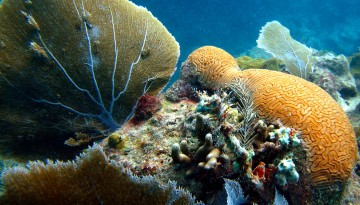
For the colorful, graceful sea fans swaying among the coral reefs in the waters around Puerto Rico, copper is an emerging threat in an era of warming oceans, according to new Cornell research.
Jennifer Grant, Ph.D. ’00, director of the state Integrated Pest Management Program, has won the Northeastern IPM Center’s inaugural Outstanding Achievements in IPM Award.
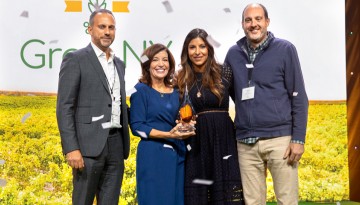
RealEats, a Geneva, New York-based company that delivers freshly made meals using locally sourced ingredients, has been named winner of the $1 million grand prize in the inaugural Grow-NY business competition.