Roger Way, Ph.D. ’53, professor emeritus of pomology and world-renowned apple breeder, died June 2 in State College, Pennsylvania. He was 100 years old.
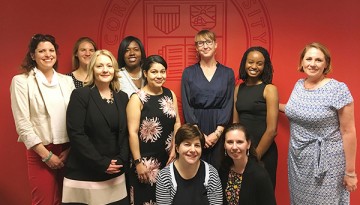
To address a funding imbalance, the Cornell Women’s Grant Fellows Workshop aims to familiarize female assistant professors with the landscape of federal funders, program officers and grant applications, and to teach tips for writing a winning proposal.
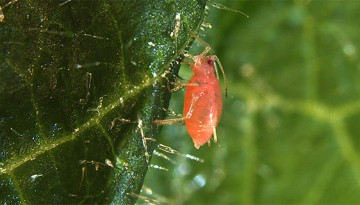
Researchers in Michelle Heck’s lab at the Boyce Thompson Institute are working to better understand how plant viruses interact with aphids on a molecular level, which could lead to better pest-control methods.
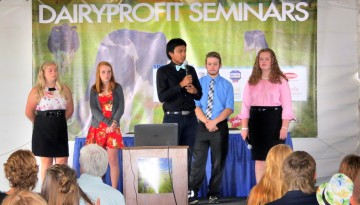
June is National Dairy Month, and Cornell PRO-DAIRY's Junior DAIRY LEADER program has built enthusiasm for the industry for 20 years through personal and professional leadership development.
Cornell plant breeders and geneticists, who’ve played a significant role in the improvement of the potato, are expanding their efforts as they make more wild potato seeds available to breeders around the world.
Eighteen Cornell doctoral students from 13 fields of study have received 2019-20 Engaged Graduate Student Grants to support community-engaged research relevant to their dissertations.
Grow-NY, announced May 31 by New York Gov. Andrew Cuomo, will be one of the largest food and agriculture business competitions in the nation, supporting innovative startups in food production and agriculture.
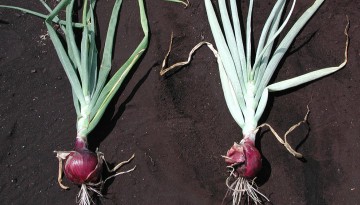
A common onion pest was wreaking havoc on New York state onion crops, but Brian Nault of Cornell AgriTech developed a science-based strategy that has decreased pesticide use and improved onion quality.
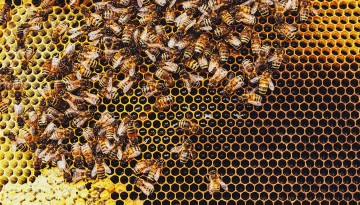
A new book describes the biology and behaviors of wild honeybees and takes lessons from nature to inform small-scale beekeepers on how to manage their hives to better face modern challenges.