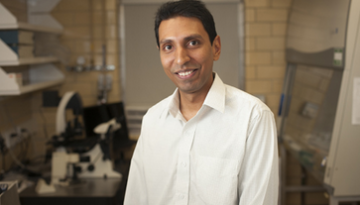
With the current, extended Farm Bill set to expire Dec. 31, Washington-based journalists met Dec. 5 with Farm Bill and dairy expert Andy Novakovic, professor in Cornell’s Dyson School of Applied Economics and Management, to discuss the legislative possibilities.
Those large, inflatable plastic characters that loom over used car lots have a new purpose: scaring away birds that cause hundreds of millions of dollars in damage to U.S. orchards and vineyards.
A a $4.9 million grant from the Bill & Melinda Gates Foundation will enable Cornell University Library to expand a database of scientific knowledge in the developing world.
Even more violent food riots and overthrown governments are predicted in a new book edited by Cornell's Christopher B. Barrett, “Food Security and Sociopolitical Stability.”
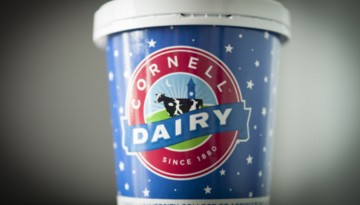
Production of Cornell Dairy ice cream resumed September 2013, sending frozen milk and tantalizing flavors burbling through all that stainless steel and into containers with a redesigned Cornell Dairy logo.
Through internships, jobs and courses, students in the Didactic Program in Dietetics gain practical, hands-on experience in running a large-scale food service operation.
Weeds, those unwanted, unloved and annoying invasive plants that farmers and gardeners hate amid their plantings, are expanding to northern latitudes, thanks to rising temperatures.