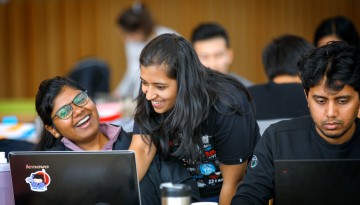
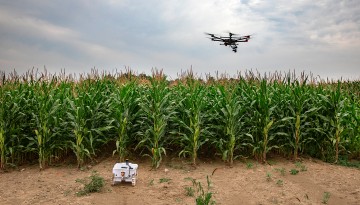
Students in fields ranging from computer science and engineering to business, agriculture and animal science convened at the second Digital Agriculture Hackathon, Feb. 28-March 1, with a shared purpose: to combine their disparate skills to brainstorm ways to make the world a better place.
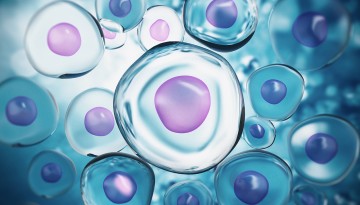
In recent years, researchers in the lab of Hening Lin discovered enzymes that remove chemical modifications – “codes” used for cell signaling – from proteins.
Recyclable plastic containers with the No. 2 designation could become even more popular for manufacturers as plastic milk jugs, dish soap and shampoo bottles may soon get an environmental makeover.
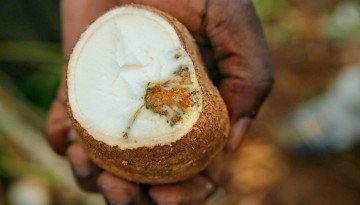
Alfred Ozimati, Ph.D. ’18, is breeding the latest in disease-resistant cassava that meets the needs of subsistence farmers, thanks to the NextGen Cassava project run by Cornell.
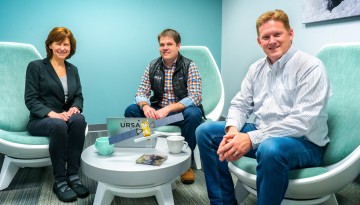
Ursa Space Systems, a geospatial intelligence agency located in Ithaca and founded by alumni Adam Maher and Derek Edinger, and Julie Baker, recently obtained $15 million in Series B funding.
Cornell faculty members are finding answers to questions related to a world on the move with a boost from Cornell’s first Migrations grants, awarded by the “Migrations” Global Grand Challenge.
Students and faculty from the world’s five leading agricultural universities, including Cornell, will spend three days learning and brainstorming at the Cornell Initiative for Digital Agriculture’s second annual hackathon, Feb. 28-March 1.
New Cornell research shows that traditional physics labs can have a negative impact on students, while nontraditional, inquiry-based labs can improve student performance and engagement.
Shaoyi Jiang, Ph.D. ’93, has been named the first Robert S. Langer ’70 Family and Friends Professor at Cornell. Jiang’s wife, Qiuming Yu, Ph.D. ’95, also will join the Cornell faculty.