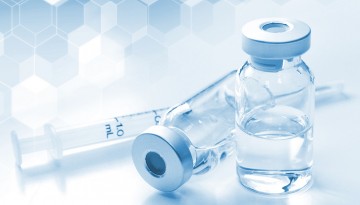
Researchers from the University of Hyderabad in India and the College of Veterinary Medicine have identified a compound that could be part of a strategy to improve the effectiveness of the dengue vaccine.
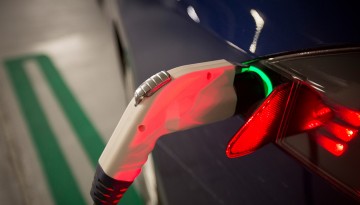
A new plan being piloted by NYSEG, in collaboration with Cornell researchers, aims to encourage electric vehicle owners to delay charging in exchange for lower prices, in order to coordinate power use across the grid.
A systematic review on the benefits and safety of fortifying wheat or maize flour with folic acid and population health outcomes was led by scientists in the Division of Nutritional Sciences.
A team led by physics professors Itai Cohen and Paul McEuen is using the binding power of magnets to design self-assembling systems that potentially can be created in nanoscale form.
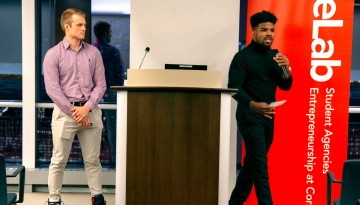
Members of eLab, Cornell’s student business accelerator, pitched their entrepreneurial ideas to business leaders, mentors and alumni at the annual eLab NYC Pitch Night, Nov. 7 at the World Trade Center.
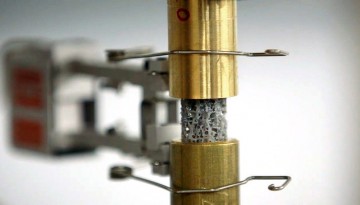
Cornell researchers have made a new discovery about how seemingly minor aspects of the internal structure of bone can be strengthened to withstand repeated wear and tear, a finding that could help treat patients suffering from osteoporosis and create durable, lightweight materials.
New research from a team of Computing and Information Science scholars raises questions about hiring algorithms and the tech companies who develop and use them.