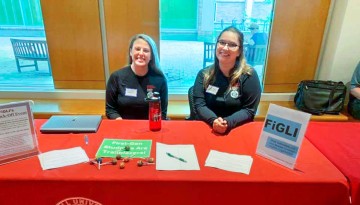
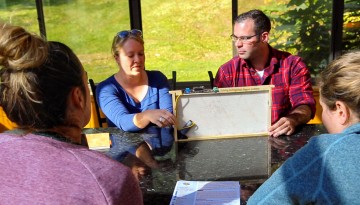
Doctoral students Rachel King, Taylor Brown and Felicia New have formed the First Generation and Low Income Graduate Student Association, addressing a need that had already been met for undergrads.
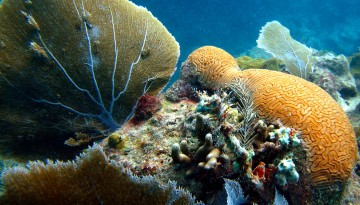
For the colorful, graceful sea fans swaying among the coral reefs in the waters around Puerto Rico, copper is an emerging threat in an era of warming oceans, according to new Cornell research.
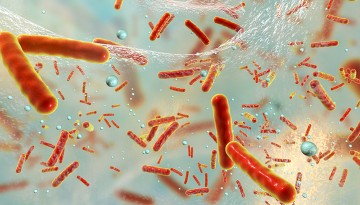
Cornell researchers have uncovered the structure of a regulatory mechanism unique to bacteria, opening the door for designing new antibiotics targeted to pathogens.
Urbano, a free software recently launched by Cornell researchers, employs data and metrics to help urban planners add walkability features to their designs.
Cornell’s Center for Data Science for Enterprise and Society, launching this fall and led by David Shmoys, will enhance research in the increasingly important field of data science.
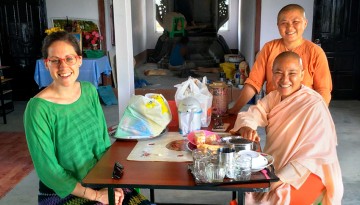
Cornell doctoral students Mary Kate Long and Jiwon Baik have received Fulbright-Hays Doctoral Dissertation Research Abroad fellowships from the U.S. Department of Education.
Finalists in Grow-NY, a business competition for innovative food and agriculture startups, are fanning out through upstate New York to meet with potential business partners as they vie for $3 million in prizes.