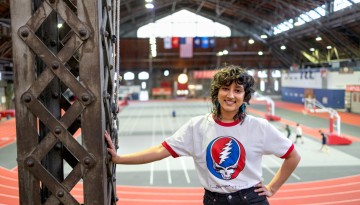
The Big Red was awash in tie-dye May 8 as Dead & Company came to Barton Hall for a jubilant benefit show that had multiple generations celebrating the return of members of the Grateful Dead to the site of one of their most historic shows.
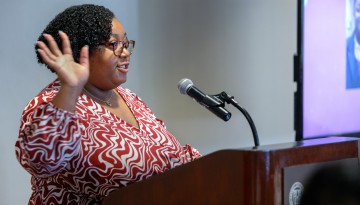
An enthusiastic audience of 100 Cornellians celebrated academic achievements and community at the Office of Academic Diversity Initiatives’ annual Honors Award Ceremony on May 5.
Three students and a recent graduate have won national scholarships that will prepare them for future global leadership and careers in STEM and public service. A fifth student received an honorable mention.
Doctoral students Chijioke Onah (English language and literature) and Nic Vigilante (music) were selected as two of 45 inaugural Mellon/American Council of Learned Societies (ACLS) Dissertation Innovation Fellows.
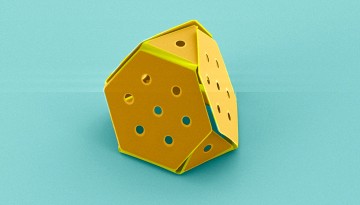
A Cornell-led collaboration harnessed chemical reactions to make microscale origami machines self-fold – freeing them from the liquids in which they usually function, so they can operate in dry environments and at room temperature.
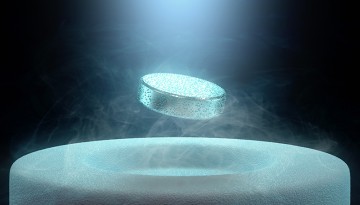
Cornell researchers have for the first time characterized a key property of the superconducting state of a class of atomically thin materials that are too difficult to measure due to their minuscule size.
Increasing women’s representation in science, technology, engineering and math majors will reduce – but not nearly eliminate – gender disparities in STEM occupations, new Cornell sociology research finds.