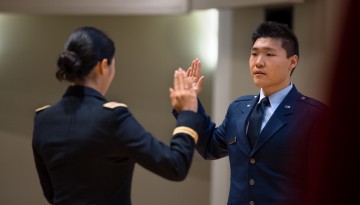
Graduating members of the Tri-Service Brigade received commissions to begin their military service – including the brigade’s first commission into the U.S. Space Force – at a May 26 ceremony in Statler Auditorium.
Cornell is breaking new ground in electron beam research with the HERACLES beamline, a state-of-the-art electron gun in Newman Lab that mimics the harsh environments of the world’s largest particle colliders.
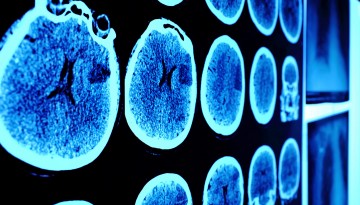
Neurons in a key area of the brain have different functions based on their exact genetic identity, and understanding this diversity could lead to better understanding of the brain’s computational flexibility and memory capacity, Cornell researchers found.
The Graduate Diversity and Inclusion Awards recognized members of the graduate community for their accomplishments, leadership and commitments to advancing efforts around diversity, inclusion, outreach and student engagement.
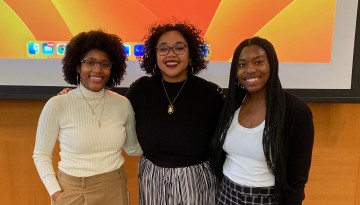
Graduate, professional and undergraduate students came together in early May to learn about and celebrate their peers’ research during the second annual Black Excellence in Research Symposium, “We Out Here.”
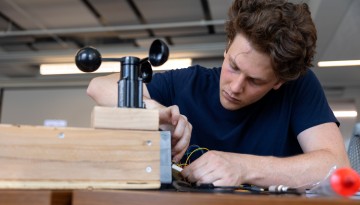
From monitoring blood pressure to potholes: Professor Max Zhang's Internet of Things (IoT) course teaches students how to leverage IoT sensor technology to solve real-world problems and help the community.
Carlos Martinez, a doctoral candidate in applied mathematics, was selected as a 2023 Schmidt Science Fellow. As a fellow, he will take on a postdoctoral placement focused on collaborative, interdisciplinary research.
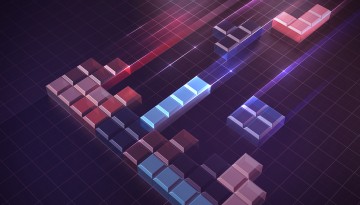
An experiment in which two people play a modified version of the video game Tetris revealed that players who get fewer turns perceive the other player as less likable, regardless of whether a person or an algorithm allocates the turns.