Ph.D. candidates Yurong You and Kim Hochstedler tied for first place in the eighth Cornell Three Minute Thesis (3MT) competition. 3MT challenges graduate students to present their thesis research compellingly to general audiences in just three minutes.
Employing AI to write full messages in an arena where personal correspondence is crucial – representative government – appears to be more effective than using AI to generate individual sentences, according to new Cornell research.
Beginning in June 2023, graduate students funded by assistantships will be eligible to purchase the same permits as faculty and staff, offering new options for students who carry out research and teaching on campus.
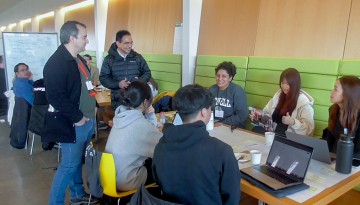
The Cornell Institute for Digital Agriculture Hackathon, an all-weekend event, drew 150 undergraduate and graduate students from most of Cornell’s schools and colleges to the College of Veterinary Medicine.
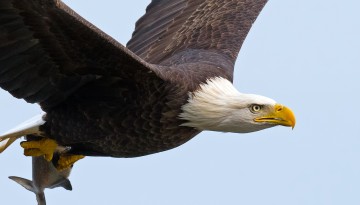
As they seek new foods because climate change has altered their traditional diet of salmon carcasses, bald eagles in northwestern Washington state have become a boon to dairy farmers, deterring pests and removing animal carcasses from their farms, a new study finds.
Ph.D. students receiving Sage Fellowships will see their summer funding increase by an additional $500 above the published rate in summer 2023. The 7.9% increase in the summer Sage Fellowship stipend will impact 500 students.
With support from the Graduate School Office of Inclusion and Student Engagement, the Multicultural Academic Council (MAC) Peer Mentoring Program facilitates connections between early and advanced graduate students.
Domestic production of photovoltaic solar panels – now made in Asia – can speed up decarbonization and reduce atmospheric climate change faster, according to new Cornell Engineering research.