Social media companies need content moderation systems to keep users safe and prevent the spread of misinformation, but these systems are often based on Western norms, and unfairly penalize users in the Global South, according to new research at Cornell.
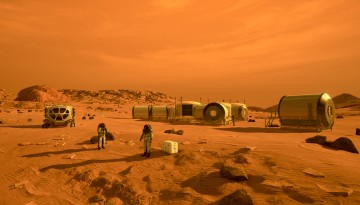
Can humans endure long-term living far from our home planet? Maybe, according to a new theory that describes the need for gravity, oxygen, obtaining water, developing agriculture and handling waste.
Using a biomaterials-based organoid, a multi-institution team led by Matt DeLisa of Cornell Engineering was able to assess the strength of the immune response to a glycoengineered vaccine in days, instead of months.
As automobile electrification speeds up, the world faces a need for critical metals to make these vehicles possible, with high demand setting off economic snags and supply-chain hitches.
Ten Graduate School doctoral candidates, joined by one student from the Weill Cornell Graduate School of Medicine, traveled from Ithaca and New York City to Capitol Hill for Cornell Ph.D. Student Advocacy Day on March 29.
Eight doctoral candidates and two postdocs were inducted into the Cornell Chapter of the Bouchet Graduate Honor Society, which recognizes scholarly achievement and promotes diversity in doctoral education.
To manage atmospheric carbon dioxide, Cornell scientists have dusted off an archaic – now 120 years old – electrochemical equation. Applying it may thwart the consequences of global warming.
People have more efficient conversations, use more positive language and perceive each other more positively when using an artificial intelligence-enabled chat tool, a group of Cornell researchers has found.