Cornell doctoral students Dory Peters and Joseph Miranda have been selected to receive 2022 Ford Foundation Fellowships. Honorable mentions were awarded to nine additional Cornell graduate students.
Cornell Tech researchers have developed a mechanism for preserving anonymity in encrypted messaging – which conceals message content but might not cloak the sender’s identity – while simultaneously blocking unwanted or abusive messages.
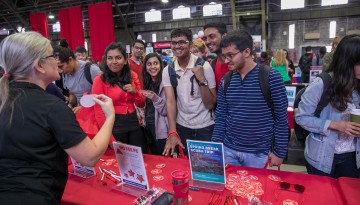
A resource fair on Monday, Sept. 12 will bring together incoming and continuing graduate and professional students from all colleges and programs to showcase more than 60 different resources from all over campus.
A Cornell-led group of researchers has developed an online search method that employs natural language processing to identify terms that are semantically similar to those for cancer screening tests, but in colloquial language.
With an eye toward a return to Comet 67P, Cornell astronomers show how smooth terrain – a good place to land spacecraft and scoop samples – develops on the icy world of touring comets.
According to new Cornell research, people are more likely to accept the COVID-19 booster the more effective it is, if there are cash incentives and if it is made by Moderna or Pfizer.
New research from Cornell offers insights into a line of CRISPR systems, which could lead to promising antiviral and tissue engineering tools in animals and plants.
New research from the ILR School suggests that people who work in industries with high levels of sexual harassment have a harder time identifying inappropriate workplace behavior.
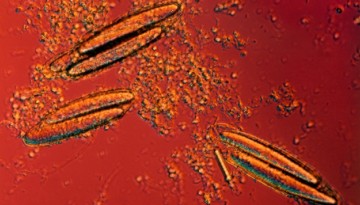
A new study finds that certain species of bacteria in the gut interact with and help balance levels of dietary cholesterol by using it to create a molecule that plays important roles in human health.