The endowed professorships will fund ground-breaking research in the areas of psychology and human development, fiber science and apparel design, and nutritional sciences.
The grant will fund a Weill Cornell Medicine-based program known as REACH: Research Enterprise to Advance a Cure for HIV, which was formed in late 2020.
A new program provides undergraduates, graduate students and postdoctoral researchers from the College of Engineering and the College of Arts and Sciences with hands-on experience in developing innovative small spacecraft missions in high-priority areas of space science.
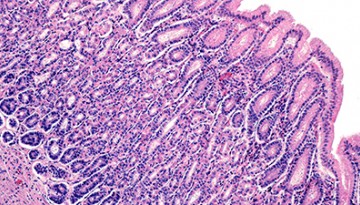
Eating fructose appears to alter cells in the digestive tract in a way that enables them to take in more nutrients, according to a preclinical study at Weill Cornell Medicine and NewYork-Presbyterian.
In a new book, “Movies on Our Minds: The Evolution of Cinematic Engagement,” psychology professor emeritus James Cutting explores the perceptual, cognitive and emotional reasons we enjoy popular films.
The risk of airplanes colliding with birds increases greatly during migrations, according to research from the Cornell Lab of Ornithology and partners, who have been looking for patterns in data from three New York City-area airports.
Models developed by university experts predict that the combination of a highly vaccinated campus population and public safety measures, including masks and testing, will minimize the risk of virus spread this fall.
When Cornell’s COVID-19 Modeling Team began developing protocols for the return to campus, they turned to Cornell librarians to comprehensively answer a series of rapidly evolving – and critically important – questions.
A study involving researchers from the College of Human Ecology and Weill Cornell Medicine estimates the incidence of elder mistreatment in New York state and advances understanding of key risk factors.