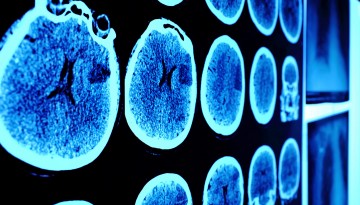
The degree to which the brain’s wiring aligns with its patterns of activity can vary with sex and age, and may be genetic, suggests a Weill Cornell Medicine-led study, which also finds that this alignment may have implications on cognition.
When it comes to increasing public support for policies and programs related to early childhood education, the target audience should determine the type of message used, according to Jeff Niederdeppe, professor of communication in CALS.
The National Science Foundation has awarded a nearly $2 million collaborative research grant to principal investigators from Cornell and other institutions to assess the effectiveness, across several metrics, of open educational resources.
Cornell researchers and their collaborators will continue to advance quantum science and technology thanks to $5.4 million in new funding from the U.S. Department of Energy to support two projects.
Researchers at Weill Cornell Medicine have shown the ability to record the high-speed motions of proteins while correlating their motion to function, which should allow scientists to study proteins in greater detail than ever before.
A radical collaboration between a biologist and an engineer is supercharging efforts to protect grape crops, and the technology they’ve developed will soon be available to researchers nationwide.
Cornell researchers have identified a new way to measure DNA torsional stiffness – how much resistance the helix offers when twisted – information that can potentially shed light on how cells work.