There’s a wide gap between how care was intended by those who support helplines and how that care was experienced in practice by those who need it most, according to new research from Cornell and Georgia Tech.
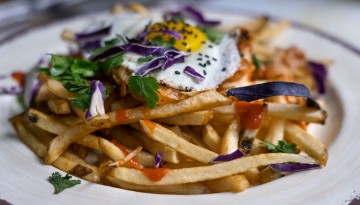
Farther Farms has created the world’s first commercially available french fries that don’t need freezing or refrigeration, with innovative technology developed at Cornell.
More than 30 students presented their research on a wide range of topics during the 35th Cornell Undergraduate Research Board Spring Symposium, held virtually May 4-7.
Diversity of children’s diets and food security improved for households after Tanzanian farmers learned about sustainable crop-growing methods, gender equity, nutrition and climate change from peer mentors.
Ed Camacho of the Cornell NanoScale Science and Technology Facility has created what is thought to be the world’s smallest rendition of Cornell’s iconic McGraw Tower – complete with its 161 interior steps, two sets of stairs and 21 bells.
When the U.S. began distributing COVID-19 vaccines this winter, Jordan Tralins ’23 found it odd that her social media feeds didn’t have any factual information about the shots. Tralins decided to do something about it.
Normal blood levels of vitamin D don’t affect one’s susceptibility to getting COVID-19 or the severity of infections, according to new research led by Bonnie Patchen, a doctoral student in the field of nutrition.