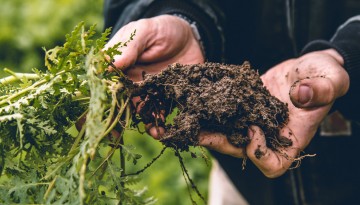
A new study describes a breakthrough method for imaging the physical and chemical interactions that sequester carbon in soil at near atomic scales, which may have implications for mitigating climate change.
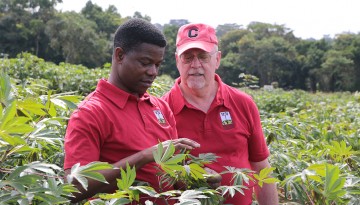
Five new cassava varieties developed with support from NextGen Cassava, an international partnership led by Cornell, have been approved for release in Nigeria.
By delving into scientific and economic data, Cornell engineers have examined whether New York could achieve a statewide carbon-neutral economy by 2050. Their finding: Yes – and with five years to spare.
By using a radio telescope array, a Cornell postdoc and an international team of scientists may have detected emissions from a planet beyond our own solar system.
Each year, the Center for Teaching Innovation grants funding through the Innovative Teaching & Learning Awards to help faculty explore new strategies and tools for enhancing student learning.
Episodes of the “Academic Minute” radio program from the week of Dec. 7 featured five faculty members from Cornell’s College of Arts and Sciences sharing insights from their research.
Cornell bioengineers have found a way to efficiently absorb and store large-scale, renewable energy from the sun, while sequestering carbon dioxide to use as a biofuel: Let microbes do the work.