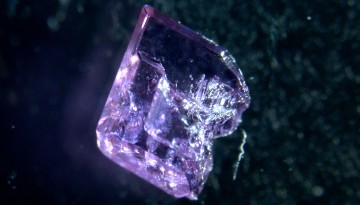
An engineered bacteria may solve challenges of extracting rare earth elements from ore, which are vital for modern life but refining them is costly, environmentally harmful and mostly occurs abroad.
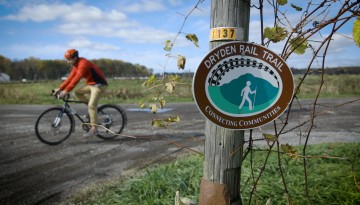
With support from Cornell, the Dryden Rail Trail is a step closer to connecting Ithaca and several nearby communities with a corridor that enables off-street commuting and expands access to natural areas.
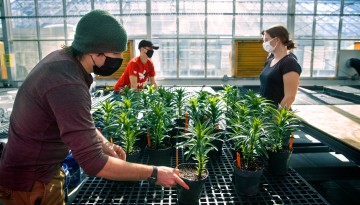
The gift from the estate of late professor Raymond Fox ’47, M.S. ’52, Ph.D. ’56, will support scholarships and fellowships as well as student participation in supplemental educational programs for undergraduate plant science students.
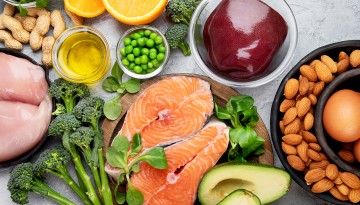
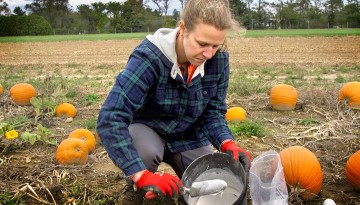
Zinc deficiency is prevalent around the world, and among children, these mineral shortfalls can lead to stunting, embryonic malformations and neurobehavioral abnormalities.
The Cornell Center for Social Sciences grant program, which supports social science research by Cornell faculty members and conferences that directly benefit Cornell faculty and students, has awarded $145,136 for 15 proposals for fall 2021.
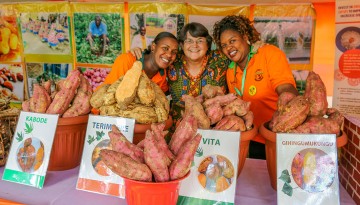
Jan Low, M.S. ’85, Ph.D. ’94, an agricultural economist whose work integrating agriculture and nutrition has improved the health of millions worldwide, has joined Cornell’s Department of Global Development.
Several Cornellians – appointed by Gov. Kathy Hochul – will explore how thewarming environment will affect New York’s communities, ecosystems and economy in the new Climate Impacts Assessment project.
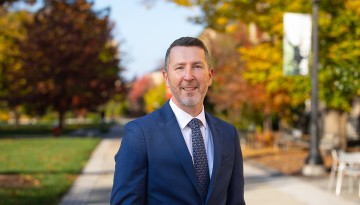
Andy Vail ’95 has been appointed assistant dean and senior director for the Office of Capital Projects and Facilities Services in the College of Agriculture and Life Sciences (CALS), effective Nov. 1. He was promoted from his previous position as senior director in that office.
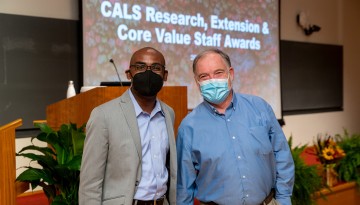
On Nov. 4, members of the College of Agriculture and Life Sciences (CALS) came together to celebrate the 17th year of the Research & Extension Awards and the 11th year of the Core Value Staff Awards.