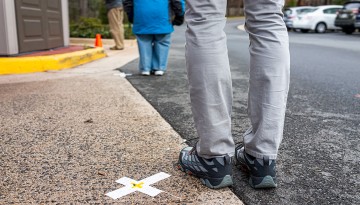
A comparative analysis of COVID-19 policies across 18 countries, led by researchers from Cornell and Harvard University, shows that varied public health and economic outcomes are linked to underlying characteristics of each society.
Mobile contact-tracing technology has emerged as one way to contain COVID-19, but contact tracing apps, which require a critical mass of adopters to be effective, face serious obstacles in the U.S., Cornell researchers have found.
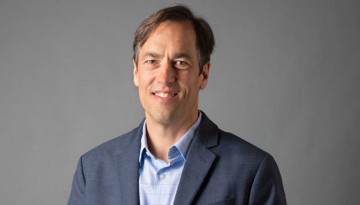
Paul Krause ’91, the university’s vice provost for external education and leader of eCornell, discusses his role and the new unit that encompasses the university’s various external education programs.
Grants awarded recently by the Cornell Center for Social Sciences seeded research projects on topics ranging from COVID-19 and policing to clean energy and product design, led by scholars from across the university.
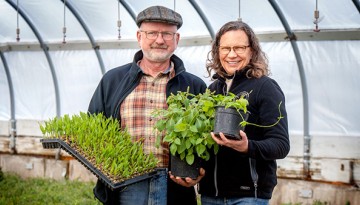
As hunger rose during the pandemic, alumni Rick and Laura Pedersen responded by sharing the bounty of their farm with local food bank in upstate New York. They have been named Cornell Alliance for Science Farmer of the Year.
More than 300 stories or university statements that mentioned COVID-19 were posted on the Cornell Chronicle website in 2020; it was, without question, the story of the year. We look back at the past 12 months.
Immigrants in detention centers have a heightened risk of COVID-19 infection, and detainees should be released into their communities, according to a report co-authored by a pair of Cornell researchers.
A Cornell-led COVID-19 patient registry, organized by Weill Cornell Medicine, continues to be a source of medical insight into the workings of the novel coronavirus and treatment of infected patients.