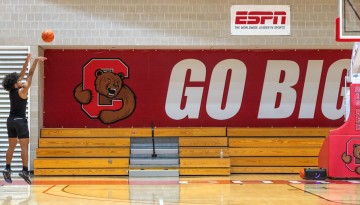
A physics theory that’s proven useful to predict the crowd behavior of molecules and fruit flies also seems to work in a very different context – a basketball court.
Human assumptions regarding language usage can lead to flawed judgments of whether language was AI- or human-generated, Cornell Tech and Stanford researchers found in a series of experiments.
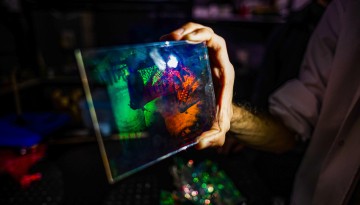
A yearslong effort to launch Cornell-made satellite technology into a neighboring solar system is making a terrestrial stop at the Intrepid Sea, Air and Space Museum in New York City with a new exhibit: “Postcards from Earth: Holograms on an Interstellar Journey.”
Their analysis of James Webb Space Telescope data produced a serendipitous discovery: a previously hidden galaxy that seems to have hosted multiple generations of stars despite its young age, estimated at 1.4 billion years old.
An interdisciplinary collaboration used a materials science approach to “fingerprint” calcium mineral deposits that reveal pathological clues to the progression of breast cancer and potentially other diseases.
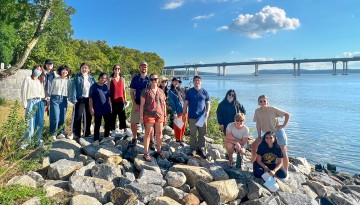
As sea levels rise over the next decades for low-lying Hudson River towns, Cornell landscape architecture students offered ideas for coping with climate change and embracing the water.
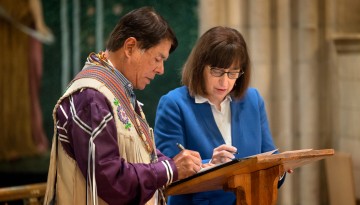
With apologies for causing harm and to right a wrong of history, Cornell returned ancestral remains that were kept on campus for six decades to the Oneida Indian Nation on Feb. 21.
Seven management doctoral students have received the 2022 Byron E. Grote, M.S. ’77, Ph.D. ’81, Johnson Professional Scholarship, which will support them in making progress with their research at Cornell.