New Cornell research is providing a fresh view into the ways a common chemotherapy agent, etoposide, stalls and poisons the essential enzymes that allow cancer cells to flourish.
In a new pilot run by Cornell and NYSEG, participants will pay a flat rate for their electricity bill and use an app that provides information about how to reduce electricity use and costs.
Researchers designed a new system of fluid-driven actuators that enable soft robots to achieve more complex motions, leveraging the very thing – viscosity – that had previously stymied their movement.
A Cornell-led collaboration has for the first time used voltage to turn on and off a material’s crystal symmetry, thereby controlling its electronic, optical and other properties – a discovery that could have a profound impact on building future memory and logic devices.
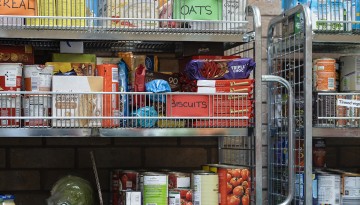
Cornell researchers found that visual depictions of food pantry offerings, including brand names, have an ameliorative effect on negative product perceptions.
A group led by Scott Stewart, clinical professor of finance and accounting at Johnson, has developed a method for better understanding mutual fund returns, which could impact both performance rankings and fund managers’ career trajectories.
A chemistry collaboration led to a creative way to put carbon dioxide to good – and even healthy – use: by incorporating it into a series of organic molecules that are vital to pharmaceutical development.
Participation in the immersive Florida Field Course led to positive professional outcomes, higher rates of publications, and faculty positions at research institutions, according to a new study from Cornell ecology and evolutionary biology researchers.