Researchers combined optical sensors with a composite material to create a soft robot that can detect when and where it was damaged – and then heal itself on the spot.
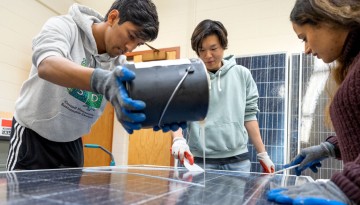
Using polyurethane, resin, epoxy – and gallons of wit – the Solar Panel Reboot student team, part of the Cornell University Sustainability Design, provides an afterlife to old, broken photovoltaic boards.
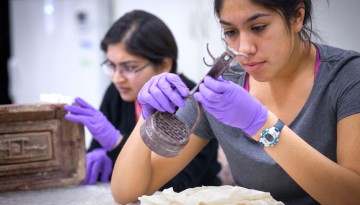
Cornell University Library has acquired a trove of archival materials documenting the creation of “The Civilization of Llhuros,” a groundbreaking 1972 art exhibit that satirized the tropes of archaeology and anthropology to draw crucial connections between the past and the present, highlighting the challenges all societies face.
Unrelenting climate change is leading to extended, late-summer weeks of water stratification, which prompts varying degrees of oxygen deprivation in lakes, says new Cornell research.
Associate Professor Greg McLaskey ’05 and members of his Cornell Engineering research group have developed a method for mimicking aftershocks, findings that eventually could help scientists better predict earthquakes.
Testing time perception in an unusually lifelike setting – a virtual reality ride on a New York City subway train – an interdisciplinary Cornell research team found that crowding makes time seem to pass more slowly.
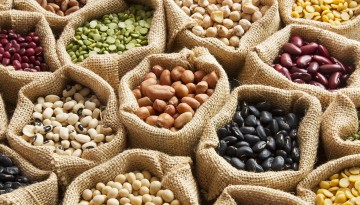
In an international, multi-institutional effort, Cornell’s Food Science Department will research how to increase iron and zinc absorption, thanks to a Bill & Melinda Gates Foundation grant.
A Cornell-led collaboration used machine learning to pinpoint the most accurate means, and timelines, for anticipating the advancement of Alzheimer’s disease.