At the upcoming Conference of the Parties – best known as COP27 – 11 Cornell students will help delegations from small countries gain a stronger environmental voice.
Both the type of online content moderator and the “temperature” of the harassing content influenced people’s perception of the moderation decision, new research finds.
The Eclectic Convergence conference included talks from six entrepreneurs, business executives and venture capitalists, as well as a pitch competition.
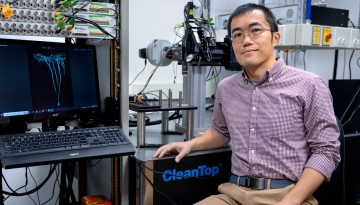
Associate professor Alex Kwan is using optical microscopy and other tools to map the brain’s neural response to psychedelic drugs, an approach that could lead to the development of fast-acting antidepressants.
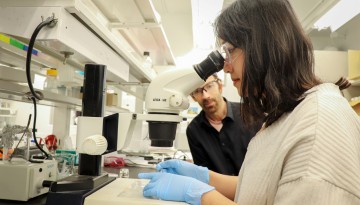
The research from the Boyce Thompson Institute focuses on neurotransmitter serotonin, which carries messages between nerve cells and is thought to play a role in several mental health conditions.
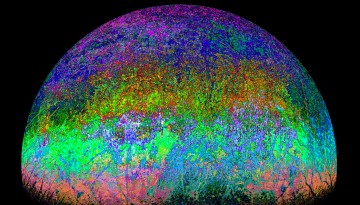
For Cornell scientists, new images from NASA’s Juno spacecraft flyby Sept. 29 of Jupiter’s moon Europa – an icy, oceanic world that may host life – brings future mission into frigid focus.
A mummified bird – and the research into its historical context and extraordinary afterlife – will be on display in an exhibition that runs Oct. 7-9, from 9 a.m. to 7 p.m., in Upson Hall’s Lounge 116.
Cornell scientists have created an evolutionary model that connects organisms living in today’s oxygen-rich atmosphere back billions of years – to a time when Earth’s atmosphere had little oxygen.
“Fixed-duration” strikes – such as the three-day walkout by 15,000 nurses in mid-September – protect worker interests and impose financial and reputation costs on employers, according to new ILR School research.