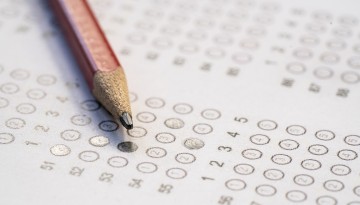
New research shows that the reason children show more progress on math exams than on English exams partially stems from incentives embedded in the way standardized tests are designed.
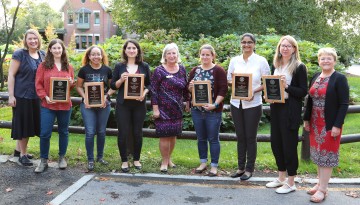
Seven postdoctoral scholars were honored with Postdoc Achievement Awards as part of Cornell’s participation in National Postdoc Appreciation Week. The awards recognize excellence in community engagement, leadership and mentoring.
Cornell researchers installed electronic “brains” on solar-powered robots that are 100 to 250 micrometers in size, so the tiny bots can walk autonomously without being externally controlled.
Organizers added a strikethrough to the conference name this year, recognizing that the word “frontier” is rooted in a history of white-settler colonialism.
Doctoral candidate Ayress Grinage and Barbara McClintock Professor of Plant Biology and Associate Dean of Faculty Chelsea Specht were selected as recipients of the 2022 Howard Hughes Medical Institute Gilliam Graduate Fellowships for Advanced Study.
Most employers continue to engage in coercive and retaliatory practices to limit union activity, a Cornell researcher told the U.S. House of Representatives Labor Committee in testimony Sept. 14.
Eleven 2030 Project grants were awarded to Cornell faculty for an array of fast-track climate solutions, including tools to help New York communities reduce their greenhouse gas emissions.