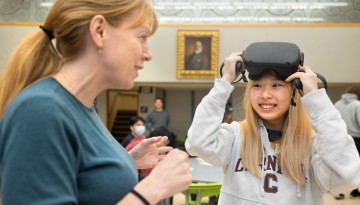
Thanks to Cornell’s Center for Teaching Innovation, students recently had the chance to prepare a sample for cryo-electron microscopy – a technique not often available to young researchers – using virtual reality headsets.
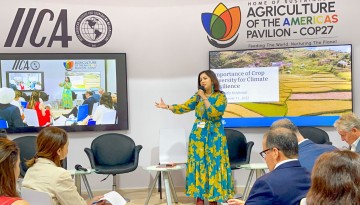
Kehkashan Basu, an MBA student at the Johnson School, hopes to kindle positive global change. She moderated the first roundtable meeting between government officials and youth at COP27.
A first-of-its kind survey reveals that Americans consider military aerial drones strikes, used with the consent of other nations, to be the most morally legitimate or appropriate.
Personal sensing data could help monitor and alleviate stress among resident physicians, although privacy concerns over who sees the information and for what purposes must be addressed, according to collaborative research from Cornell Tech.
Fifty-five graduate students have been selected as new National Science Foundation Graduate Research Fellowship Program (NSF GRFP) fellows, joining Cornell's community of over 200 NSF GRFP fellows currently on campus.
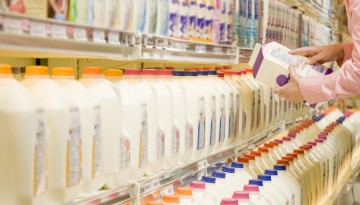
Consumers would be willing to buy milk from cows only treated with antibiotics when medically necessary – as long as the price isn’t much higher than conventional milk, according to researchers at the College of Veterinary Medicine.
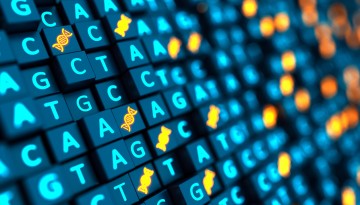
A Cornell team has developed a way to spatially map the entire spectrum of RNA in a cell’s transcriptome, revealing the role of previously elusive RNA in skeletal muscle regeneration and viral myocarditis in mice.
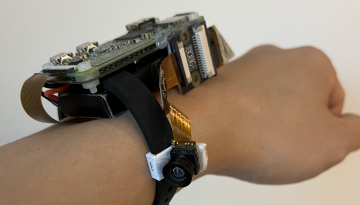
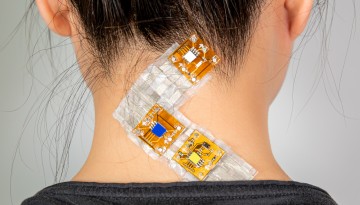
Members of Cornell’s Hybrid Body Lab have come up with a reliable on-skin computing interface that’s easy to attach and detach, and can be used for a variety of purposes – from health monitoring to fashion.