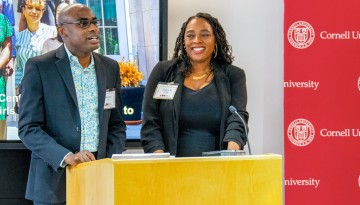
The Action Research Collaborative, housed in the Bronfenbrenner Center for Translational Research, is partnering with a New York state agency to strengthen early childhood care and education across the state.
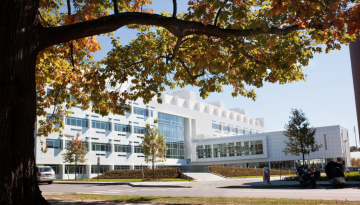
The Weill Institute for Cell and Molecular Biology will bring together leading scientists from across the globe and across disciplines for its 8th Biennial Weill Institute Symposium, Oct. 13–14. The two-day program, taking place in Ithaca, NY., will showcase advances in molecular and cell biology research, while fostering opportunities for Cornell students and postdoctoral scholars to connect with internationally recognized leaders in the life sciences.
Researchers in the Virtual Embodiment Lab found that engagement in social virtual reality, whether with loved ones or total strangers, enhances pain tolerance.
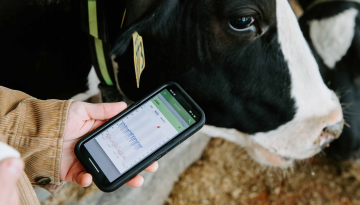
Cornell University has been awarded a portion of a $2 million planning initiative from the U.S. National Science Foundation to establish AI4Ag, a national testbed for artificial intelligence in agriculture.
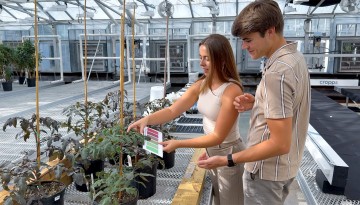
The Center for Teaching Innovation will host “What Works,” on Oct. 1, featuring presentations, the Canvas Course Spotlight awardees, and a poster showcase that will demonstrate engaged learning approaches from Cornell faculty teaching in a diverse range of courses and fields.