An animal scientist studying relationships between insulin and milk production in dairy cows has received a three-year, $500,000 grant from the U.S. Department of Agriculture National Institute of Food and Agriculture.
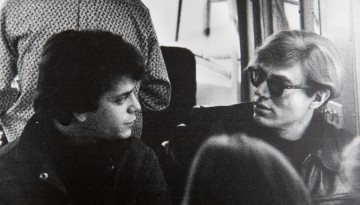
Judith Peraino, professor of music, won a grant from the National Endowment for the Humanities to research artist Andy Warhol’s influence on pop and rock musicians in the 1970s, including David Bowie and Lou Reed.
Doctoral students Rob Swanda and Juliana González-Tobón have taken the internet by storm with their videos that take some of the mystery out of the COVID-19 vaccines.
A Cornell doctoral student’s analysis of Chinese policies found that, contrary to conventional wisdom, market-based or incentive-based policies may actually benefit regulated firms in the traditional and “green” energy sectors.
Cornell scientists from the College of Engineering have identified nitrides as new contenders when it comes to quantum materials for computing and low-temperature electronics.
New research from the lab of Cedric Feschotte in CALS investigates how genetic elements called transposons, or “jumping genes,” are added into the mix during evolution to assemble new genes.
The CAT Lab, led by J. Nathan Matias, assistant professor of communication in CALS, recently received nearly $1.3 million in grants to further its citizen science studies on the effects of digital technology on society.
A new study identifies the mechanism for tolerance to penicillin and related antibiotics in bacteria, findings that could lead to new therapies that boost the effectiveness of these treatments.